
Prefer to watch? The full episode is on YouTube. Subscribe so you don’t miss the next one, and follow us on Facebook.
Quick summary: the Short Account of the Destruction of the Indies, printed in Seville in 1552, is one of the most cited and most disputed books in the history of Spain. Bartolomé de las Casas was not an enemy of the monarchy: he was writing so that Prince Philip, the future Philip II, would persuade the emperor to halt what he called conquests. The documentary asks whether he exaggerated, what he saw with his own eyes, how Spain’s rivals used his book, and what lies behind the name “Black Legend”.
“Gentle sheep” and “wolves”: the most controversial sentence
“Into these gentle sheep,” he writes, “the Spaniards entered […] like wolves and tigers and most cruel lions.” The author is not an enemy of Spain: he is a Spanish friar, Bartolomé de las Casas, and the sentence opens the Brevísima. For centuries the book was often used as proof that the Spaniards were the cruellest conquerors in the world. For others, it is the origin of the Black Legend. The documentary’s question is different: did Las Casas exaggerate, or did he tell what others kept quiet?
A book written for a prince
The first point is whom it was written for. It did not begin as a tract designed to attack Spain before Europe: it was addressed to those in power. The book itself says Las Casas was writing it in 1542, and the 1552 printed version is dedicated to Prince Philip. His aim was specific: that the Crown should no longer permit what he called conquests. In the prologue he asks the prince to persuade the emperor to refuse those licences. The Brevísima is a denunciation written to persuade. That does not make it false, but it explains its tone, and its way of presenting Indigenous people as innocent lambs and the conquistadors as beasts.
What he saw with his own eyes — and what he was told
Las Casas was not writing at second hand. He reached the Indies in the early sixteenth century and spent decades there. In the text he sometimes separates what he saw from what he was told. Of Hispaniola, after describing terrible cruelties, he says: “I saw all the things stated above, and many other infinite things.” In Cuba he says the people of a large town came out to meet them with food and gifts, and that the Spaniards then “put to the sword, in my presence […] more than 3,000 souls”.
The difference matters. When he comes to Mexico, he tells the capture of Moctezuma “as some of those who were there told me”. Of the Cholula massacre he writes “it is said”. There are, then, two kinds of testimony: what he claims to have seen, and what he gathered from others.
Three million, fifteen million: figures no one could count
The Brevísima is most contested in its numbers. Las Casas says that Hispaniola had “about three million souls” and that, when he writes, fewer than 200 remain. Of the Indies as a whole he says that in forty years “more than twelve million souls” have died, and that he believes the figure is more than fifteen million. That is a figure he offers, not a verified demographic datum. No one took a census of the Indigenous population before 1492, and historians still debate how many people lived in the Americas then.
Las Casas also attributes almost the entire catastrophe to cruelty and greed. Today we know that epidemics from the Old World were one of the main factors in the demographic collapse, together with wars, forced labour, famine and the breakdown of Indigenous societies. Did he exaggerate? In the numbers, very probably yes — or at least he gave figures no one could check. But the collapse of the Caribbean population was real, and he had it in front of him.
Antwerp, London, Frankfurt: the book that crossed Europe
In 1578 it appeared in Dutch, in Antwerp, during the revolt of the Netherlands against Philip II. The next year a French translation by Jacques de Miggrode came out, its title page saying openly that it should serve as an example and a warning to the Seventeen Provinces. In 1583 London saw The Spanish Colonie, translated from the French. In 1598, in Frankfurt, Theodor de Bry published a Latin edition with seventeen engravings of the most atrocious scenes. Those images helped spread across Europe a brutal picture of the Spanish conquest.
The paradox is clear: a Spanish friar writes so that his own king will correct the abuses, and some of the Hispanic monarchy’s rivals later used that same text to present the Spanish as a naturally cruel nation.
The New Laws and Valladolid: the debate inside Spain
That propaganda often left something else unsaid: Las Casas’s denunciations were not silenced in Spain; they were debated at court. In November 1542, in Barcelona, the New Laws were issued, seeking to protect Indigenous people and to limit the encomiendas. The settlers’ reaction was so strong that in 1545 the Crown revoked the clause that barred inheritance of encomiendas. Only that part: the rest of the New Laws remained in force.
In 1550–1551 one of the most remarkable debates of the age was held in Valladolid: Las Casas faced the humanist Juan Ginés de Sepúlveda, who defended the justice of war against Indigenous peoples. It was not a trial in the modern sense, but a theological and legal controversy, and it reached no clear verdict. Even so, it is striking that the Crown allowed so open a discussion, before its own counsellors, of whether its conquests were just. The abuses existed and were denounced by Spaniards. The debate about them also existed inside Spain.
Who named the “Black Legend”?
The phrase is not from the sixteenth century. It was popularised by a 1914 book by Julián Juderías, though it had been used earlier. Some studies note that Emilia Pardo Bazán employed it in a lecture in Paris in 1899. Juderías defined it as a legend according to which the Spanish had to be, as he put it, cruel and intolerant.
Imperiofobia: the book that reopened the debate
A century later the debate returned with force. In 2016 Elvira Roca Barea published Imperiofobia y leyenda negra (Siruela), a huge bestseller. According to her publisher, the book compares the negative image suffered by several empires — Rome, Russia, the United States — in order to look at the Spanish Empire with more perspective. Roca Barea argues that hispanophobia was born in intellectual circles and became a plank of Lutheran nationalism and of other currents in the Netherlands and England.
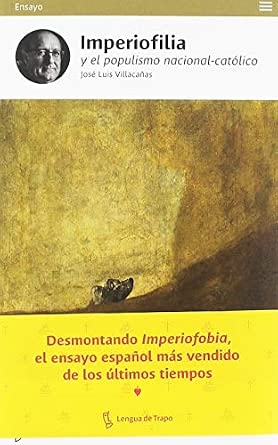
Her thesis is far from universally accepted. José Luis Villacañas replied in 2019 with Imperiofilia y el populismo nacional-católico, arguing that the book lacks rigour. Roca Barea’s book is therefore part of the debate, not its conclusion. The documentary recommends it as further reading, not as a source, and presents that critique alongside it. ISBN of the edition cited in the description: 978-84-19419-06-4.
Verdict: did Las Casas exaggerate?
In part, yes. His figures cannot be checked; his portrait of Indigenous people as blameless sheep is more moral than historical; and it is not always clear how much of his stories comes from direct experience and how much from other people’s testimony. But to call everything he denounced a legend would be another myth. The abuses were real, they were debated at court, and the Crown itself legislated to curb them, though with limited results.
The documentary’s most honest conclusion is this: the Black Legend was not born from a lie invented from nothing, but from a text that was partly true and partly exaggerated, which others then took out of context and used as a weapon. Separating those layers is precisely the work of history. For the conquest of Mexico, continue with the myth that a few Spaniards conquered America.
Frequently asked questions about the Black Legend and Las Casas
What is the Spanish Black Legend?
It is the name, popularised above all in 1914 by Julián Juderías, for a picture of the Spanish as a naturally cruel and intolerant people. The term is not from the sixteenth century, though the debate about the conquest is.
Did Bartolomé de las Casas exaggerate?
In the figures, very probably yes: he gave numbers no one could verify. On the substance, the demographic collapse of the Caribbean and many of the abuses he says he saw were real. The documentary distinguishes what he saw, what he was told, and what was later used as propaganda.
Did Las Casas write to attack Spain in Europe?
Not originally. The 1552 Brevísima is dedicated to Prince Philip and sought to have the Crown halt the conquests. The Dutch, French and English translations, and De Bry’s engravings, later turned it into a weapon for the monarchy’s rivals.
Were the denunciations silenced in Spain?
No. The New Laws were issued in 1542, and in 1550–1551 the Valladolid controversy took place between Las Casas and Sepúlveda. The Crown even allowed the legitimacy of its own conquests to be debated, though practical enforcement was limited.
📚 Recommended books
Further reading

As an Amazon Associate I earn from qualifying purchases.
More Historia española episodes
- What is the Spanish Black Legend? Where the term comes from and where the debate stands
- Did a few Spaniards conquer America? The myth you were told
- Did Hernán Cortés burn his ships?
- All episodes
Prefer to watch? The full episode is on YouTube. Subscribe so you don’t miss the next one, and follow us on Facebook.
Main sources
- B. de las Casas, Brevísima relación de la destrucción de las Indias (1552), ed. J. M. Martínez Torrejón
- The Spanish Colonie (London, 1583); Narratio regionum indicarum (Frankfurt, De Bry, 1598)
- M. Livi Bacci, “Las múltiples causas de la catástrofe”, Revista de Indias (2003)
- The New Laws (Barcelona, 1542) and the 1545 decree of Mechelen; the Valladolid controversy (1550–1551)
- E. Pardo Bazán, Paris lecture (1899); J. Juderías, La leyenda negra y la verdad histórica (1914)
- E. Roca Barea, Imperiofobia y leyenda negra (Siruela); J. L. Villacañas, Imperiofilia y el populismo nacional-católico (2019)
- Historia española documentary “Leyenda negra: ¿exageró Bartolomé de las Casas?” (2026)